01
National Justice Snapshot
A concise, evidence-based picture of the justice system at a fixed point in time.
A rapid institutional and system baseline against which reform can be planned and measured.

Where it looksWhole justice chain, with institutional and geographical detail
The first four were set out by Sri Lanka’s Minister of Justice as the questions the national Snapshot should help government ask.
Where are services needed most?
Where are resources insufficient?
What reforms should come first?
How do we measure progress?
Where are justice services located – and where are the gaps?
What has changed since the last Snapshot?
Measured once to set the baseline. Measured again to show the direction and pace of change.
A Justice Snapshot uses data that justice institutions already collect and puts them together in a way that is easy to see and understand. It shows how justice services work in practice, from local level to national level.
Its distinctive feature is the combination of mapping the location of justice services with data visualisations that show how the system is actually working. The result is a neutral, evidence-based account of the paths people take to justice, the gaps and obstacles they face, and what government can do to address them.
The Snapshot is designed to be repeated. Core indicators can be measured again at agreed intervals to show the direction and pace of change. National experts help collect, analyse and validate the evidence, building capacity to maintain it.
Justice Snapshot work includes South Central Somalia, Ethiopia and Sri Lanka, with an ongoing assignment in Lao PDR.
Collect and consolidate existing administrative data across the justice chain and identify critical gaps.
Locate services, compare resources against demand and show variation hidden by national averages.
Bring institutions together around a common evidence base.
Repeat the core indicators to track what has changed.
Each institution measured on its own terms – and in relation to the others, because dysfunction in one is often caused or amplified by another.
Produces
Action Matrix and time-bound Roadmap.
A concise, evidence-based picture of the justice system at a fixed point in time.
The location of justice services mapped, combined with data visualisations showing how the system is actually working.
Priorities drawn from the evidence and set out as a sequenced set of actions.
Agreed indicators, targets and review dates for measuring implementation over time.
For many years, justice sector reforms have often been challenged by fragmented data, disconnected planning, and the absence of one clear picture. The Justice Snapshot responds directly to that challenge.
“The Justice Snapshot is not a judgement from outside, it is a tool for Lao PDR, adapted to your own context and priorities… When we look ahead we need a clear view, when we look back we need to be honest about what we see …”
“The combined effect is to produce a compelling, because neutral, narrative about paths people take to justice, the gaps and obstacles they face and what government can do to address them.”
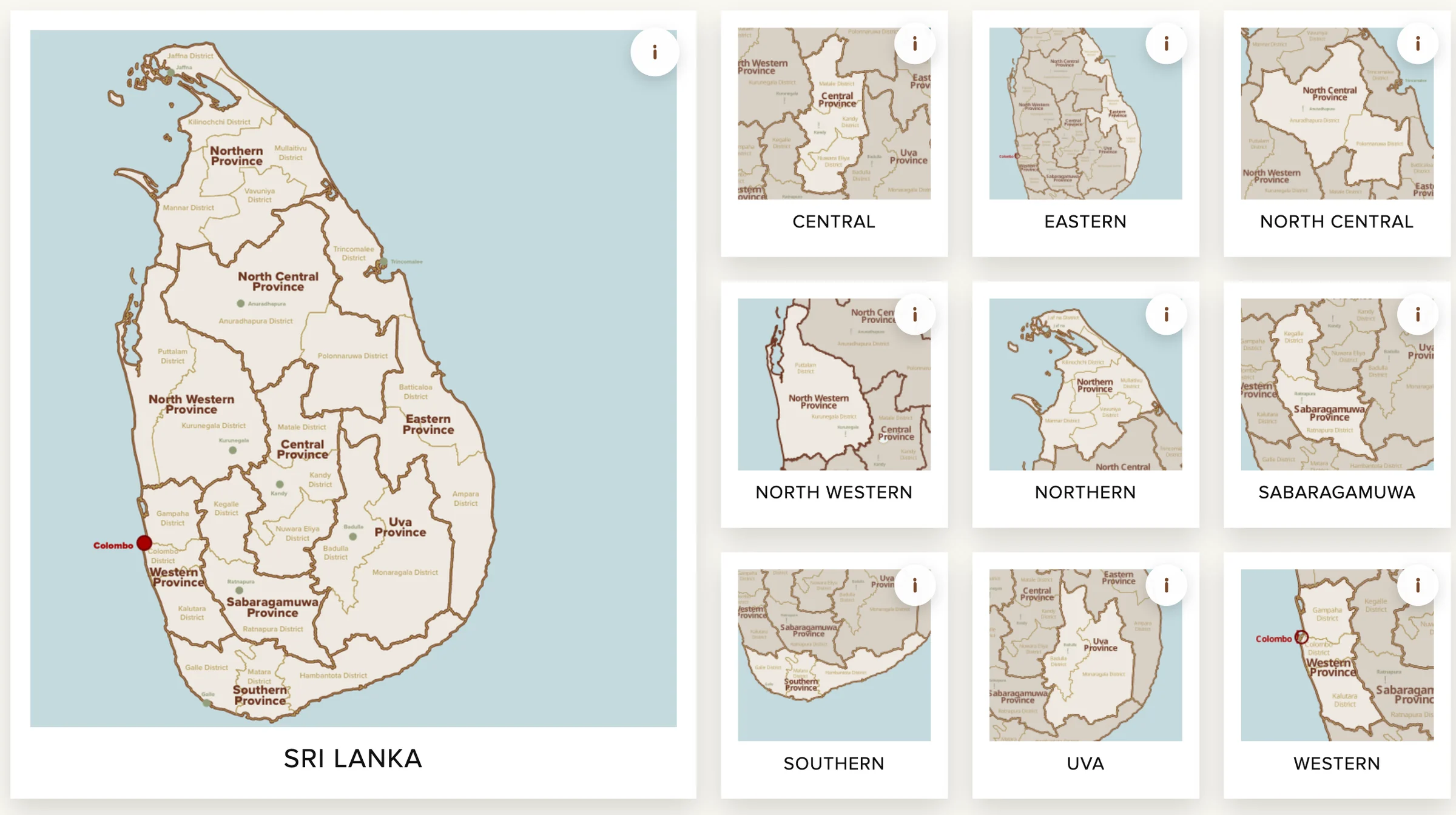
Real assignments, with national partners.
Every product can be commissioned on its own as part of core justice reform. The Justice Snapshot is also configured for these three applications:
Start with a conversation about a specific problem. Choose the one closest to yours and tell us a little about your context.