01Core output
Persons eligible for release
Case-level identification of people eligible for lawful release or alternatives to custody.
Case-level and institutional analysis identifying drivers of overcrowding, excessive pre-trial detention and opportunities for lawful release or alternatives.
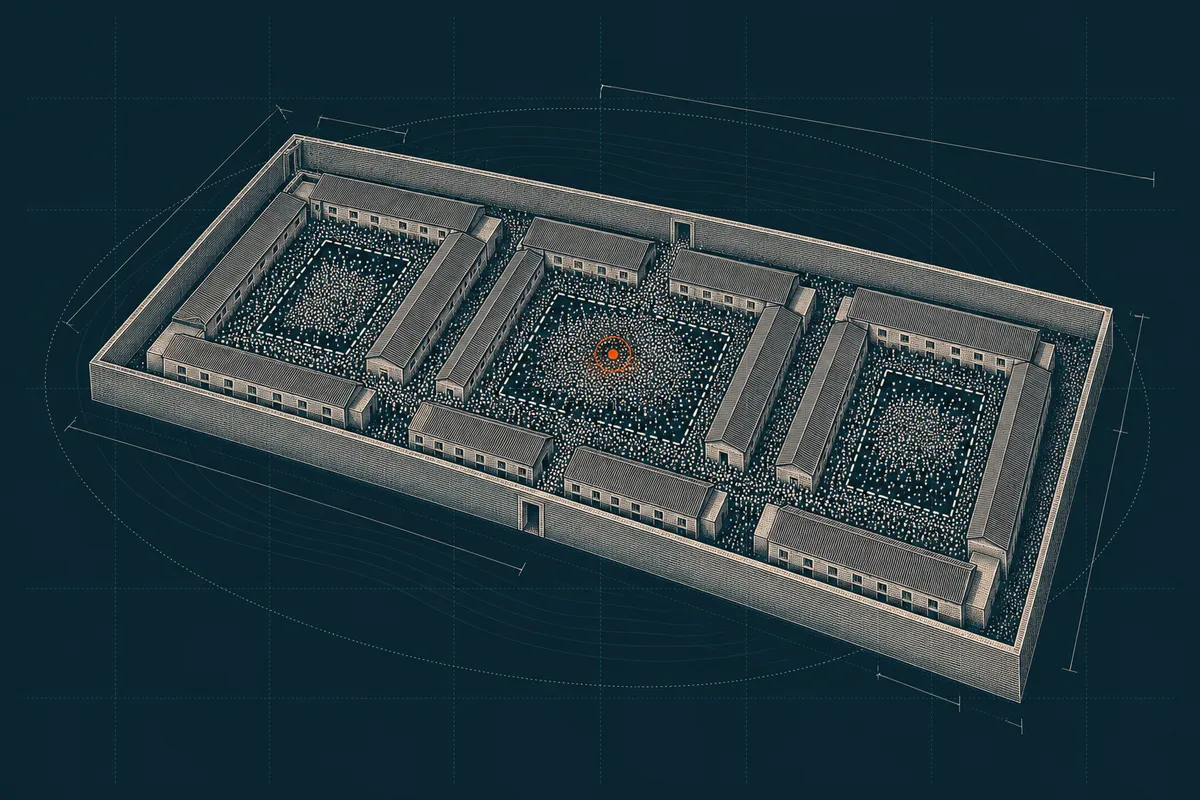
Where it looksPrisons and pre-trial detention
The answers come from individual case files as well as institutional returns – so release recommendations rest on evidence the institutions recognise.
Who is in prison – and what is their legal status?
Which prisons have the highest proportion of unsentenced detainees?
How long are people held on remand?
Who is eligible for lawful release or an alternative to custody?
What is driving overcrowding?
Are alternatives to custody and early release mechanisms being used?
Who is held → with what legal status → for how long → why → who can lawfully be released.
Prison overcrowding can reflect pressure elsewhere in the justice chain: slow investigations, delayed hearings, limited legal aid or unused alternatives to custody. A Prison Audit looks behind the headline population figure to establish who is held, with what legal status, for how long – and why.
The analysis works at case and institutional level. It identifies people eligible for lawful release or an alternative to custody, for referral to the courts, and policy measures that could reduce recurring pressure on prisons.
National researchers and practitioners work with the institutions concerned to verify findings and develop release and policy recommendations. The institutions concerned are involved in validating the evidence.
Disaggregated by status, case type, gender, age and time in custody.
Follow cases back through police, prosecution and courts.
People who can lawfully be released or diverted to alternatives.
Measures to reduce excessive pre-trial detention over time.
Measured case by case and institution by institution, then set against the rest of the justice chain.
Slow investigations
Delayed hearings
Limited legal aid
Unused alternatives
Overcrowding
Produces
Identification of persons eligible for release and policy recommendations.
Case-level identification of people eligible for lawful release or alternatives to custody.
The population disaggregated by status, case type, gender, age and length of detention.
Where pressure on prisons originates across the justice chain – and why.
Practical measures to reduce excessive pre-trial detention and overcrowding.
>50%
Of unsentenced persons in three Malawian prisons were released by the courts as a direct result of the Prison Audit.
Maula | Kachere897 remand prisoners interviewed
66%eligible for releaseNamed lists submitted to the courts
9%indicated guilty pleas15 youth under 21 · 2 women · 63 adult men
Mzuzu170 remand prisoners interviewed
55%eligible for releaseNamed lists submitted to the courts
17%indicated guilty pleas3 youth under 21 · 3 women · 23 adult men
Grounds for release · named prisoners
| Measure | Value |
|---|---|
| Maula | Kachere: remand prisoners interviewed | 897 |
| Maula | Kachere: eligible for release | 66% |
| Maula | Kachere: indicated guilty pleas | 9% |
| Maula | Kachere: guilty pleas, youth under 21 | 15 |
| Maula | Kachere: guilty pleas, women | 2 |
| Maula | Kachere: guilty pleas, adult men | 63 |
| Mzuzu: remand prisoners interviewed | 170 |
| Mzuzu: eligible for release | 55% |
| Mzuzu: indicated guilty pleas | 17% |
| Mzuzu: guilty pleas, youth under 21 | 3 |
| Mzuzu: guilty pleas, women | 3 |
| Mzuzu: guilty pleas, adult men | 23 |
| Bail as of right: Maula | Kachere, youth under 21 | 4 |
| Bail as of right: Maula | Kachere, adult general population | 13 |
| Bail as of right: Mzuzu, adult general population | 5 |
| Bail granted by lower court: Maula | Kachere, youth under 21 | 12 |
| Bail granted by lower court: Maula | Kachere, adult general population (incl. 2 women) | 75 |
| Bail granted by lower court: Maula | Kachere, adult homicide-charged population | 48 |
| Bail granted by lower court: Mzuzu, youth under 21 | 1 |
| Bail granted by lower court: Mzuzu, adult general population (incl. 2 women) | 18 |
| Overstayed minor offence: Maula | Kachere, youth under 21 | 6 |
| Overstayed minor offence: Maula | Kachere, adult general population | 28 |
| Overstayed minor offence: Mzuzu, youth under 21 | 1 |
| Overstayed minor offence: Mzuzu, adult general population | 13 |
| Overstayed serious offence: Maula | Kachere, youth under 21 | 17 |
| Overstayed serious offence: Maula | Kachere, adult general population (incl. 6 women) | 174 |
| Overstayed serious offence: Maula | Kachere, adult homicide-charged population | 215 |
| Overstayed serious offence: Mzuzu, youth under 21 | 6 |
| Overstayed serious offence: Mzuzu, adult general population | 59 |
Real assignments, with national partners.
Every product can be commissioned on its own as part of core justice reform. The Prison Audit is also configured for this application:
Start with a conversation about a specific problem. Choose the one closest to yours and tell us a little about your context.